Sample website: Architects: Hollis & Park Architects
New homes, renovations and additions. We start by listening, and we stay with you until the last nail.
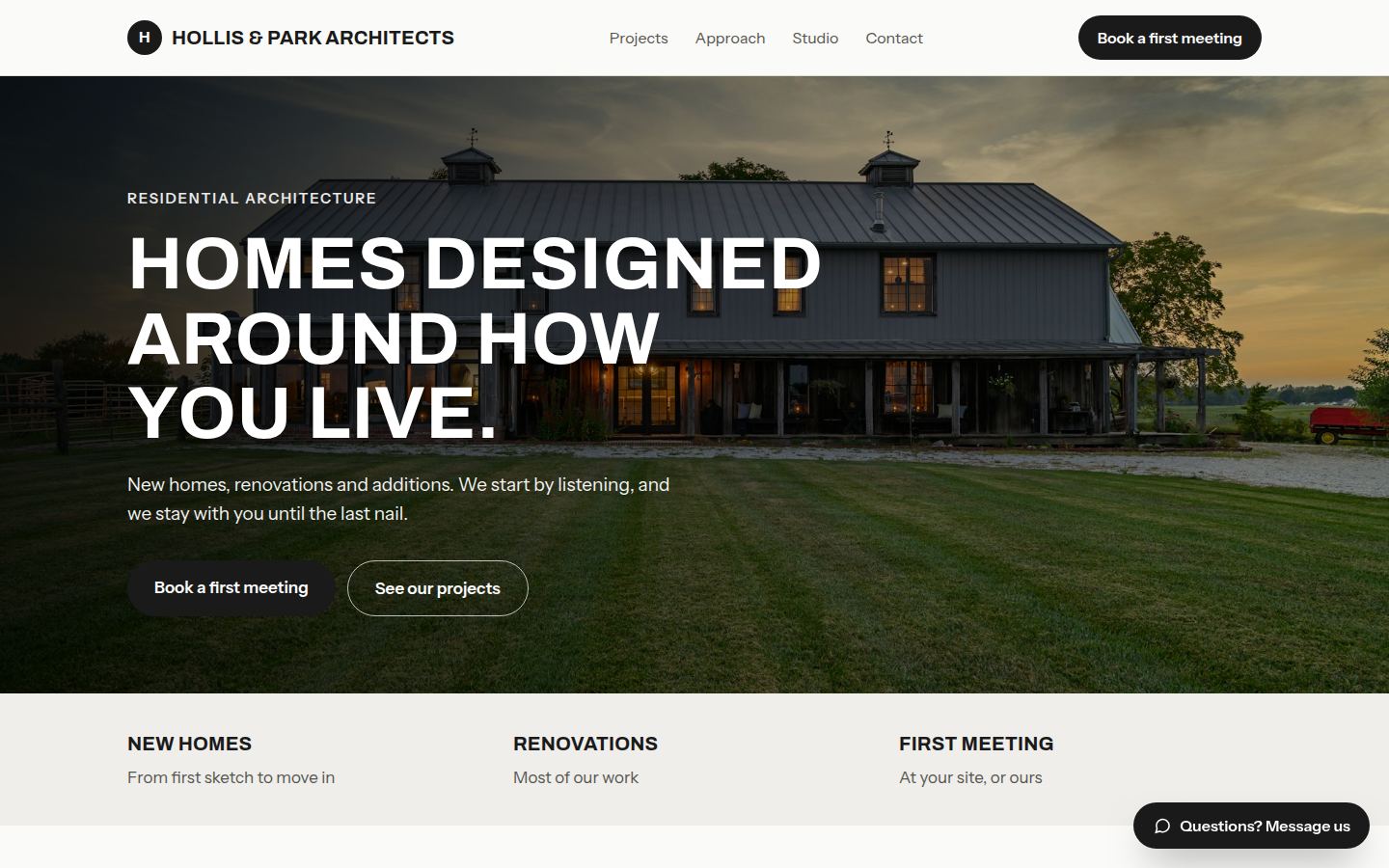
Sample work by Oiko. Every business shown is made up.
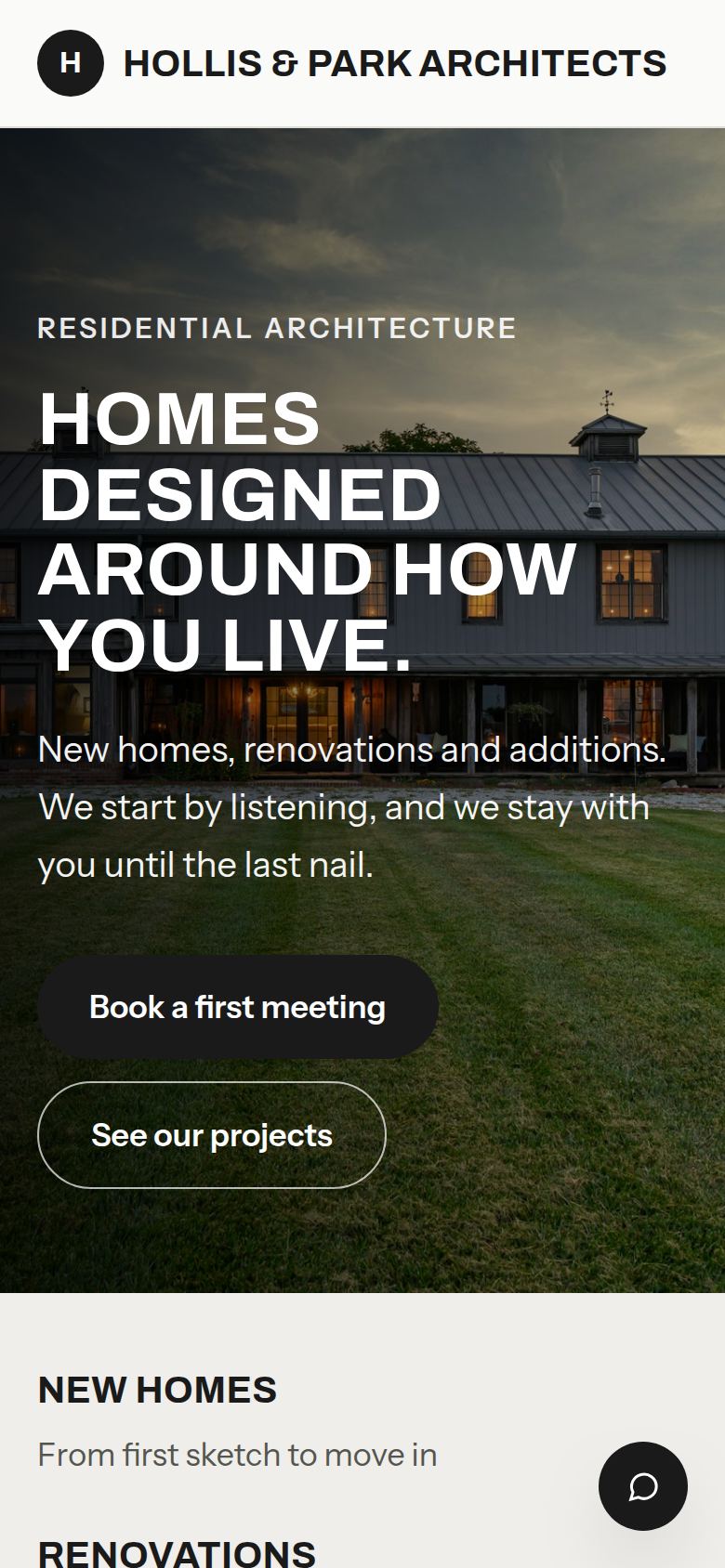
The same sample on a phone.
How we would build it
This is a sample for a made-up business. There is no client and no result to report: this is how we would plan and build it for a real one.
The problem
A small architecture practice wins work on trust, and trust starts with the first look at the website. The site has a few tiny photos. A homeowner cannot tell what the practice does, how it works, or how to start. Inquiries come in as vague emails that take three rounds of questions to understand. The practice would rather spend that time at the drawing table.
What we built
For our sample architecture practice, Hollis & Park Architects, we would build a quiet website: recent projects in large photos, a short page on how the practice works, and a first meeting form that asks the right questions up front. Visitors see what a first meeting involves before they ask for one: an hour, at the site, at the studio or by video, to listen and say honestly what the job would take.
Problem and answer
Homeowners cannot tell what the practice does.
The top of the page says it plainly: new homes, renovations and additions. Renovations are named as most of the work.
The projects look like a pile of photos.
Each project gets a photo and one sentence on the problem it solved, such as a house stepped down a slope so every room faces the water.
Inquiries arrive as one line emails.
The first meeting form asks if it is a new home, a renovation or an addition, and where the owner would like to meet.
Setting up a first meeting takes a week of emails.
Visitors choose from the practice's own open times. The meeting goes straight into the calendar.
Clients worry about being surprised by invoices.
The approach page explains that the work is billed by stage, and clients can pay each stage online by card or bank transfer.
How it works
- 01A visitor reads about the approach and looks at the projects.
- 02They book a first meeting: the kind of project, where to meet, and a time.
- 03The meeting is added to the calendar, with the project type in the title.
- 04The practice sends a short note before the meeting, saying what to have ready.
- 05Later, each invoice goes out by stage and can be paid online.
Works with
- Google Calendar, for first meetings and site visits
- Google Business Profile, so the studio shows up with the right address and hours
- Stripe or bank transfer details, for invoices by stage
- QuickBooks, so invoices and payments sit with the practice's accounts
- Gmail, so inquiries land in the inbox the practice already uses
The plan we would follow
- Week 1We talk with the architects about how they work, and decide which projects tell the story best.
- Weeks 2 and 3We write the project notes and the approach page, and lay out the photos so they load fast on a phone.
- Week 4We build the first meeting form and test it with a few friendly visitors.
- Week 5We connect the calendar and invoices, and check every image and every link.
- Week 6Launch, with a simple way for the practice to add a new project themselves.
What the owner keeps
- The domain name and the website files
- Every project photo, in full size
- The calendar and the invoicing accounts
- The project notes, as plain text the practice can reuse